Dietary requirements
Ordering a Cake for Dietary Needs
How to tell a cake maker about a dietary requirement, what belongs in the brief, and the questions worth putting to a maker before you order.
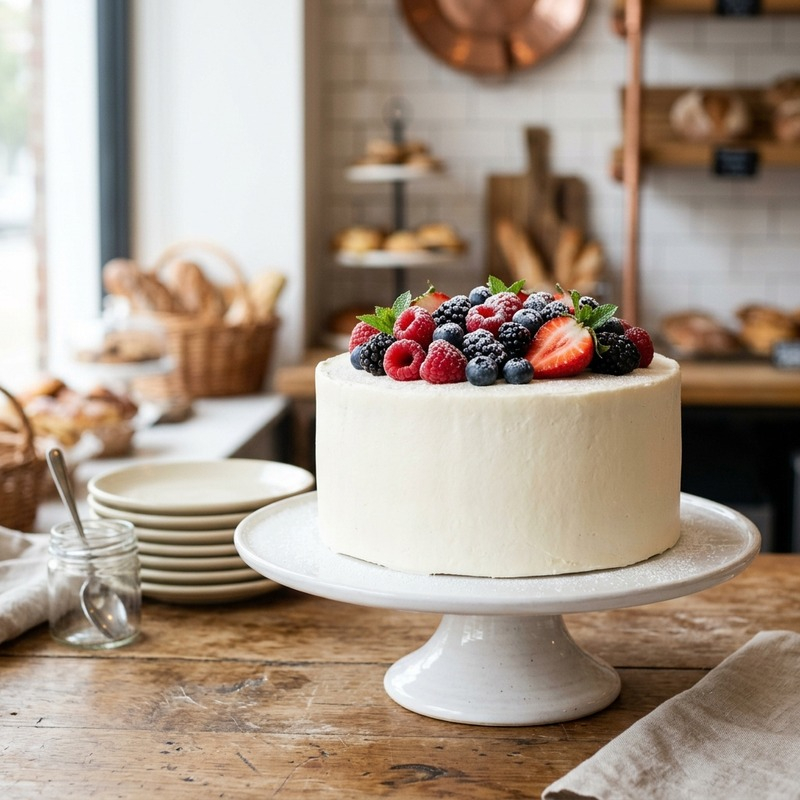
There is a moment at plenty of Australian parties that nobody plans for. The cake comes out, the candles go in, everyone sings, and one person at the table quietly does not take a slice. Sometimes it is a child with a gluten intolerance. Sometimes it is the guest of honour, who cannot have dairy. Sometimes it is a grandparent watching their sugar who would rather not make a fuss about it.
This article is about avoiding that moment. It is not health advice, and it does not tell you what any person can or cannot eat. Those judgements belong with the maker and with the health professional who knows the person. What follows is simply about ordering well, so that when you commission custom cakes, the requirement is on the table from the first message.
When to raise it
Say it in the brief, not on the day
A dietary requirement is not a finishing touch. It changes what goes into the cake, which equipment and surfaces get used, and when the cake can be made.
A maker working to a gluten free recipe usually has to source different flour, set aside separate tins and tools, and find a production slot that suits the way their kitchen runs. None of that can be arranged on the morning of a pickup.
So the requirement belongs in your very first message, sitting alongside the date, the number of servings and the look you want. Makers quote and schedule from that opening brief. When the requirement turns up later, the quote you accepted no longer describes the job, and the maker has to work out whether the change fits in the time that is left.
Late requests often cannot be taken on, and the reason is seldom unwillingness. Ingredients have to be ordered. A separate slot in the schedule may be needed. Some makers will not accept dietary work at short notice at all, because doing it properly takes preparation they no longer have time for. This is one more reason to think about when to book, so the requirement and the design get decided in the same conversation.
If you are still choosing between makers, mention it in the enquiry anyway. Anyone who cannot help will say so early, and that saves both of you a week of back and forth.
The brief
What to tell a cake maker
A useful brief is specific. "Something gluten free" leaves a maker guessing at the shape of the job, and guesses turn into quotes that cannot be compared. Put the following in writing.
- Which requirement.Gluten free, dairy free, egg free, nut free, reduced sugar, vegetarian or vegan. Name each one that applies, because two requirements together is a different job from either on its own.
- Whose requirement it is.The birthday person, one guest, a table of four, or a child at a party of thirty. Who it is for shapes how the maker approaches it.
- Whether it is a preference or a medical requirement.Makers handle those two situations very differently, and they need to hear which one they are dealing with in your words, not work it out from context.
- Whole cake or part of it.Say whether everything on the table needs to meet the requirement, or only one portion of it.
- Numbers.Total guests, and how many of them the requirement applies to.
- The date, the venue and how the cake is getting there.Delivery, pickup, and how long the cake will sit out before it is cut.
Scale matters more than people expect. A dairy free birthday cake for a six year old and a dairy free tier on a wedding cake are not the same piece of work, and a maker who is comfortable with one may not take on the other. The same goes for sugar. If you have been looking for a gluten free bakery cake and finding only packaged products on a shelf, say that in the enquiry too, because a made to order cake and a pre-packaged one are different conversations entirely.
If you do not know the exact terminology, write what you do know and say that you are not certain. A maker would far rather read an honest description than a confident one that turns out to be wrong.
Before you choose
Questions worth asking the maker
Once the requirement is in the brief, the next step is finding out how a particular maker works. Ask in writing, and read the whole answer instead of stopping at the first reassuring sentence.
- How do you handle preparation for this kind of requirement in your kitchen?
- What can you commit to for this order, and what can you not commit to?
- Have you made a cake to this requirement before, and how did you approach it?
- What do you need from me to take it on?
- Does the requirement change the design, the flavour options or the finish?
- How will the cake be described or labelled when it reaches me?
- Does it change the price or the lead time?
The answers will vary quite a lot between kitchens, and that is the point of asking. Some makers do this work constantly and will describe their process without being prompted. Others will be upfront that it falls outside what they take on. Both responses are useful, and the second one is worth more than a vague yes.
Deciding whether an answer is good enough for the person eating the cake is not a judgement this article can make for you. That conversation belongs with the maker, and with the health professional who looks after the person concerned. Putting the same questions to a shortlist of custom cake makers at least lets you compare like with like, instead of comparing a detailed reply against a one-word one.
Two ways to do it
Whole cake or a separate portion
There are two common ways to handle a dietary requirement at a party. One is to make the entire cake to the requirement, so everyone eats the same thing. The other is a main cake plus a smaller separate cake for the person who needs it.
- The whole cake made to the requirement.This keeps the table simple and nobody gets singled out. It can also change the flavour range you can choose from, and depending on the ingredients involved, it may change the price for every serving rather than just one.
- A separate small cake.Often the cheaper option for a single guest, and it gives that person something made for them. It does mean two items on the table, so it is worth deciding early whether you want the smaller cake to match the main one or sit beside it as its own little thing. A maker can design them as a pair if they know from the start.
If your search so far has been some version of "where to buy diabetic cakes for birthdays" and turned up more recipes than makers, briefing a custom maker is usually the quicker path. Describe the occasion, name the requirement, and let each maker tell you what they would do with it.
In short
Getting it right from the first message
Every part of this comes back to one habit: put the requirement in the brief at the beginning, in plain words, with the detail a maker actually needs. That single step is what turns a dietary requirement from a problem discovered late into an ordinary part of the order.
Ask your questions in writing, compare the answers you get, and leave the judgements about what suits the person to the maker and to their health professional. Then everyone at the table gets cake, which was the whole idea. When the date is set, get cake maker quotes with the requirement written in from the first line.
You have the brief
Now put it in front of the right makers
One brief covers the date, the servings, the design and the dietary requirement, so the answers you get back already tell you who can take it on.