Provider
Cake makers and cake decorators, across Australia
The person who bakes the cake, builds it, finishes it and gets it to the venue in one piece. Here is what cake makers do, how they differ from designers and dessert artists, and what to send them so the quotes you get back are worth comparing.
- Australia wide
- One brief, several responses
- No obligation to book
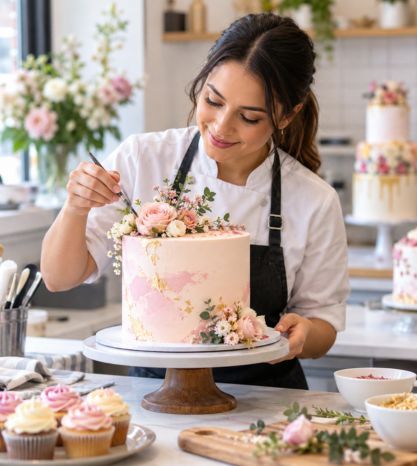
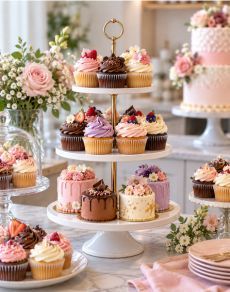
Cake makers do the part you cannot see
Most people judge a cake on the outside. A cake maker spends most of the job on everything underneath it: the recipe that holds a shape in a warm room, the internal supports that stop a tall cake leaning, the fillings that survive a two hour drive, and the timing that means the cake is finished hours before it is needed rather than minutes.
That is why a custom cake is quoted over priced. Two cakes the same height can take very different amounts of work depending on the covering, the detail, the structure and where it has to go. When you brief a cake maker properly, you are really telling them how much of that work the cake needs.
Decorators, designers and dessert artists all sit around this same job. The difference is where each one puts their attention.
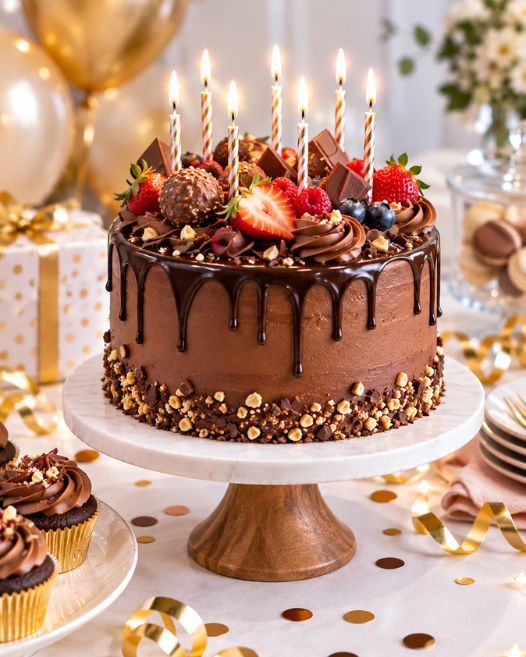
Who does what
Four specialists, four different jobs
These titles are used loosely across the industry, and plenty of people wear more than one. Use this to work out who to approach first.
Cake Maker
Bakes, builds, fills and finishes the cake. Usually the person quoting, delivering and setting up. Best for: Most birthday, celebration and custom cakes.
Cake Decorator
Focuses on the finish: buttercream texture, piping, fondant work, hand painting and sugar detail. Best for: A specific decorative technique you have seen and want.
Cake Designer
Leads with design. Shapes concept, structure and styling before anything goes in the oven. Best for: Sculptural, editorial or statement cakes.
Dessert Artist
Builds the wider dessert offering that sits beside or instead of a single cake. Best for: Dessert tables, grazing styling and mixed sweets.
Briefing a cake maker
Six things worth putting in your first message
A vague enquiry gets a vague answer. These six details let a cake maker tell you quickly whether they are right for the job, and what it is likely to cost.
- Servings, not size.Say how many people need a slice. Tin sizes and tiers follow from that, and every maker portions a little differently.
- The date and the address.Delivery, setup and travel change a quote more than most people expect, especially on a weekend.
- Flavours and dietary needs.Gluten free, dairy free, nut free and vegan requests need to be raised first, not confirmed later.
- Two or three reference images.Pictures communicate faster than adjectives. Say what you like about each one so it can be reinterpreted rather than copied.
- A budget band.A range is enough. It lets a maker propose the strongest version of your cake at that level instead of guessing.
- Whether the cake is the centrepiece.A cutting cake beside a dessert table is a different job to a cake that has to carry the room.
Servings drive almost every other decision, including tiers, tin sizes and price. The cake size and serving guide works backwards from your guest count so you can put a real number in your brief.
Comparing responses
What a good quote tells you
Price on its own is hard to compare, because it is bundling different things. When responses come back, look for the parts that explain the number.
- Servings.The number of portions being quoted, not just the cake size.
- Structure.Tiers, dummy tiers, internal supports and whether it is stacked on site.
- Finish.Buttercream, ganache, fondant, hand painting, sugar work or fresh florals.
- Delivery and setup.Whether it is collection only, delivered, or delivered and assembled at the venue.
- Timing.When the design is locked, when the balance is due and when changes stop being possible.
Common questions
Working with a cake maker
What does a cake maker actually do?
A cake maker takes a celebration brief and turns it into a finished cake: recipe and flavour, structure and support, filling, covering, decoration, then delivery and setup where required. On a custom cake, the quote covers design time and construction as well as ingredients, which is why two cakes of the same size can be quoted very differently.
What is the difference between a cake maker and a cake designer?
The work overlaps, and many people do both. As a rough guide, a cake maker leads with baking and finish, while a cake designer leads with concept and structure. If you can describe the cake in a sentence, a cake maker is usually the right starting point. If you want somebody to develop the idea with you, look at cake designers.
How far ahead should I contact a cake maker?
Wedding cakes are commonly booked several months ahead because dates are exclusive and tastings take time. Birthday and celebration cakes usually need a few weeks. Short notice is sometimes possible, particularly midweek. The booking timeline guide covers this by cake type.
Do cake makers work from a shopfront?
Many do not. A large share of Australian custom cake work is produced from registered home based or studio kitchens with collection and delivery and not a retail counter. Ask where collection happens, whether delivery is offered to your venue and how the cake will be transported.
How many cake makers should I ask?
Enough to compare, not so many that you cannot reply properly. Sending one clear brief and reviewing a handful of responses is usually the fastest route to a decision you feel good about.
Cake makers by market
Start with your state
Cake work is local, because somebody has to deliver it.
One brief, several responses
Tell cake makers what you are celebrating
Share the occasion, the servings and the look you are after. Relevant cake professionals respond with what they would make.